Description: An quick, easy-to-follow explanation of derivatives. This video helps brea… more ›An quick, easy-to-follow explanation of derivatives. This video helps break down the concept of derivatives in a way that anyone can understand. ‹ less
Description: Learn how to use the Product Rule to take derivatives. After watching this… more ›Learn how to use the Product Rule to take derivatives. After watching this video, you will have all the skills necessary to become a Product Rule master. You will learn about the concept behind this rule and how to apply it through real examples. ‹ less
Description: The Quotient Rule tends to trip up a lot of students first learning how to … more ›The Quotient Rule tends to trip up a lot of students first learning how to take derivatives. But it doesn't have to! This video covers how and when to use the Quotient Rule as well as some examples problems. If you are in Calculus 1, watch this video to learn a simple trick to mastering the Quotient Rule. ‹ less
Description: The Chain Rule is often the trickiest derivative technique for students to … more ›The Chain Rule is often the trickiest derivative technique for students to understand and use. This video explains the concept of this rule as well as some example problems. After watching this video, any Calculus 1 student will have the confidence to use the Chain Rule to take the derivative of any equation! ‹ less
Description: Learn what Concavity is and how to find it for any function! Concavity is … more ›Learn what Concavity is and how to find it for any function! Concavity is an incredibly important principle for many Calculus applications. Just as the first derivative of a function corresponds to the function's slope, the second derivative corresponds to the function's concavity. This concept is often used to find and classify relative maximum, relative minimum and inflection points. ‹ less
Description: Learn how to find the maximums and minimums of any function! This video fi… more ›Learn how to find the maximums and minimums of any function! This video first explains the difference between relative and absolute maxs and mins. Using Calculus and derivatives, we then learn how to find them with a straight forward 5 step process. Finally, we use the First Derivative Test and Second Derivative Test to classify maximums and minimums. This video utilizes skills from previous videos like derivatives, slope and concavity. ‹ less
Description: Learn how to solve any optimization problem in Calculus 1! This video expl… more ›Learn how to solve any optimization problem in Calculus 1! This video explains what optimization problems are and a straight forward 5 step process to solve any of them. We will step through 2 very common optimization examples to help you understand and master this concept. This video utilizes skills from previous videos like derivatives, slope, concavity, maximums and minimums. ‹ less
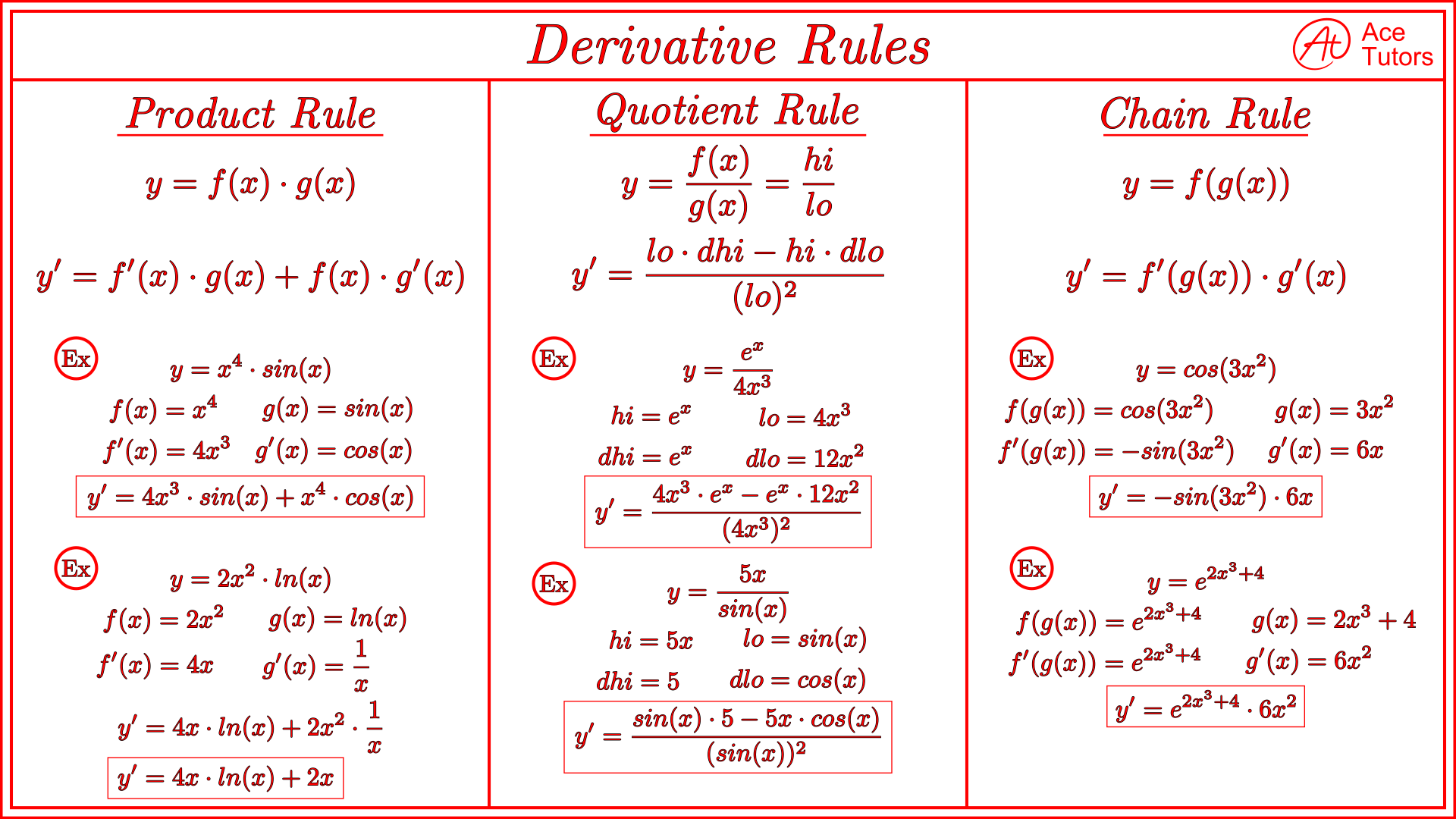
Description: Need a Cheat Sheet for Derivative Rules? This guide illustrates the 3 main… more ›Need a Cheat Sheet for Derivative Rules? This guide illustrates the 3 main derivative rules: the Product Rule, Quotient Rule and Chain Rule! See our other videos for more detailed explanations! ‹ less
Description: Learn the meaning behind Continuity and Differentiability. This video expl… more ›Learn the meaning behind Continuity and Differentiability. This video explains what Continuity is and the 3 rules for a function to be continuous at a point. Then we discuss what is needed for a function to be continuous on an interval. We also cover this topic with plenty of examples for each rule. Next, we explain Differentiability and the 1 rule for a function to be differentiable at a point. Similarly to Continuity, we then discuss how a function can be a differentiable on an interval. Once again, this concept is explained with a few examples. And don't miss our tips and tricks for determining the Continuity and Differentiability of a function! ‹ less
Description: Learn the basics of Integrals! This video explains what Integrals, or Anti… more ›Learn the basics of Integrals! This video explains what Integrals, or Antiderivatives, are and why we need them on a simple, easy-to-follow level. After learning about derivatives, we find out that Antiderivatives are exactly the opposite. Like addition and subtraction, or multiplication and division, derivatives and integrals are opposite operations. The basic idea behind Indefinite Integrals is also explored. ‹ less
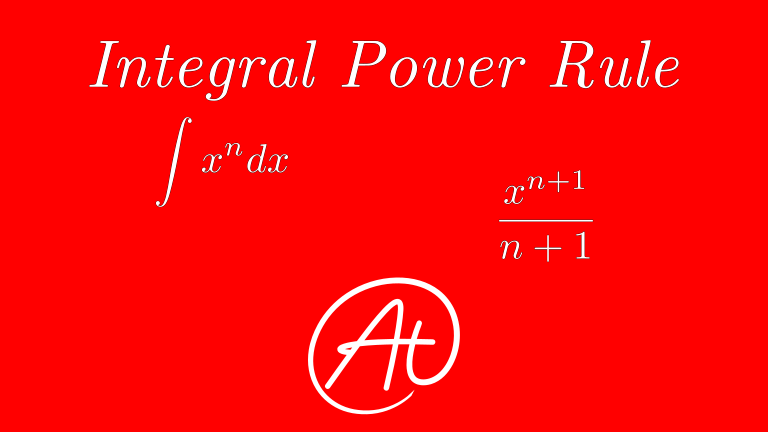
Description: Learn how to use the Power Rule to find Integrals or Antiderivatives. Just… more ›Learn how to use the Power Rule to find Integrals or Antiderivatives. Just like there is a Power Rule for finding Derivatives, there is also a simple, straight-forward Power Rule for finding Integrals. Since Derivatives and Integrals are opposites of each other, you just have to do the opposite steps of the Derivative Power Rule in the opposite order to find the Integral of any variable raised to a constant power. ‹ less
Description: Learn how to find the Integral or Antiderivative of 1/x. Unfortunately, yo… more ›Learn how to find the Integral or Antiderivative of 1/x. Unfortunately, you can't use the traditional power rule for integrals to solve this. Even if you remembered the derivative of the natural log of x, ln(x), is 1/x, you wouldn't have the complete answer! Watch this video to find out the solution! ‹ less
Description: Learn how to find Definite Integrals. This video explains what definite in… more ›Learn how to find Definite Integrals. This video explains what definite integrals are, how they are similar to derivatives and how they are different from indefinite integrals. Watch this video for an explanation of the concept as well walkthroughs of a couple example problems. This video utilizes skills learned with indefinite integrals and the integral power rule. ‹ less
Description: Learn what it means when a Definite Integral returns a negative answer. Th… more ›Learn what it means when a Definite Integral returns a negative answer. This does not mean that you broke Math by finding a negative area. Definite Integrals find the area between a function and the x-axis. However, they count area above the x-axis as positive area and area below the x-axis as negative area. In calculating the final result, the negative area will cancel out some or all of the positive area to returns a negative, zero or positive answer. This video explains the topic and goes through an example problem to illustrate the concept. Skills with integrals, antiderivatives and derivatives are necessary for this video. ‹ less
Description: Learn about using U-Substitution to find Integrals. In this video, I expla… more ›Learn about using U-Substitution to find Integrals. In this video, I explain the concept behind U-Substitution and where it comes from. This concept can be difficult for a lot of students, but it doesn't need to be! With a straight forward 5 step process, you can master this integration technique. After explaining the idea behind the topic, I cover a quick example to see this technique in action. This topic uses skills learned in Definite Integrals, Indefinite Integrals, Antiderivatives, Trigonometry, Derivatives and Chain Rule. ‹ less
Description: Learn how to use Integration by Parts to solve complex integrals. This vid… more ›Learn how to use Integration by Parts to solve complex integrals. This video first covers the concept of this integration technique as well as where it comes from. Just like U-Substitution, this technique is derived from a derivative rule; this time from the Product Rule. Then this video explains a 5 step process for how to use Integration by Parts to find any integral that needs it. This process is explained with a quick example as well. Skills needed for this concept include Integrals, Derivatives, Definite Integrals, Indefinite Integrals, Product Rule and Chain Rule. ‹ less
Description: Learn how exactly to pick your "u" and "dv" for use in … more ›Learn how exactly to pick your "u" and "dv" for use in the Integration by Parts integration technique. In our last video, we discussed where this method comes from, the process behind this technique and a quick example problem. In this video, you will learn how to do the most important part of the process: picking your "u" and "dv". There is a simple acronym (ILATE) that describes how exactly to pick the u. After that, the rest of the integration technique follows. ‹ less
Description: Learn what Tabular Integration, or the Tabular Method, is and how to use it… more ›Learn what Tabular Integration, or the Tabular Method, is and how to use it to solve any integral that requires it. This method, is a useful integration technique that can be used whenever you are performing repeated Integration by Parts. Instead of having to repeatedly pick and differentiate u as well as pick and integrate dv, you can use this method to make everything easier! In this video, you will learn where Tabular Integration, also called the DI Method, comes from and how it can be used to speed up tedious integration by parts problems. After discussing the concept, we will solidify the idea with an example problem. This video draws on skills from past videos including: derivatives, antiderivatives, indefinite integrals, definite integrals, and integration by parts. ‹ less
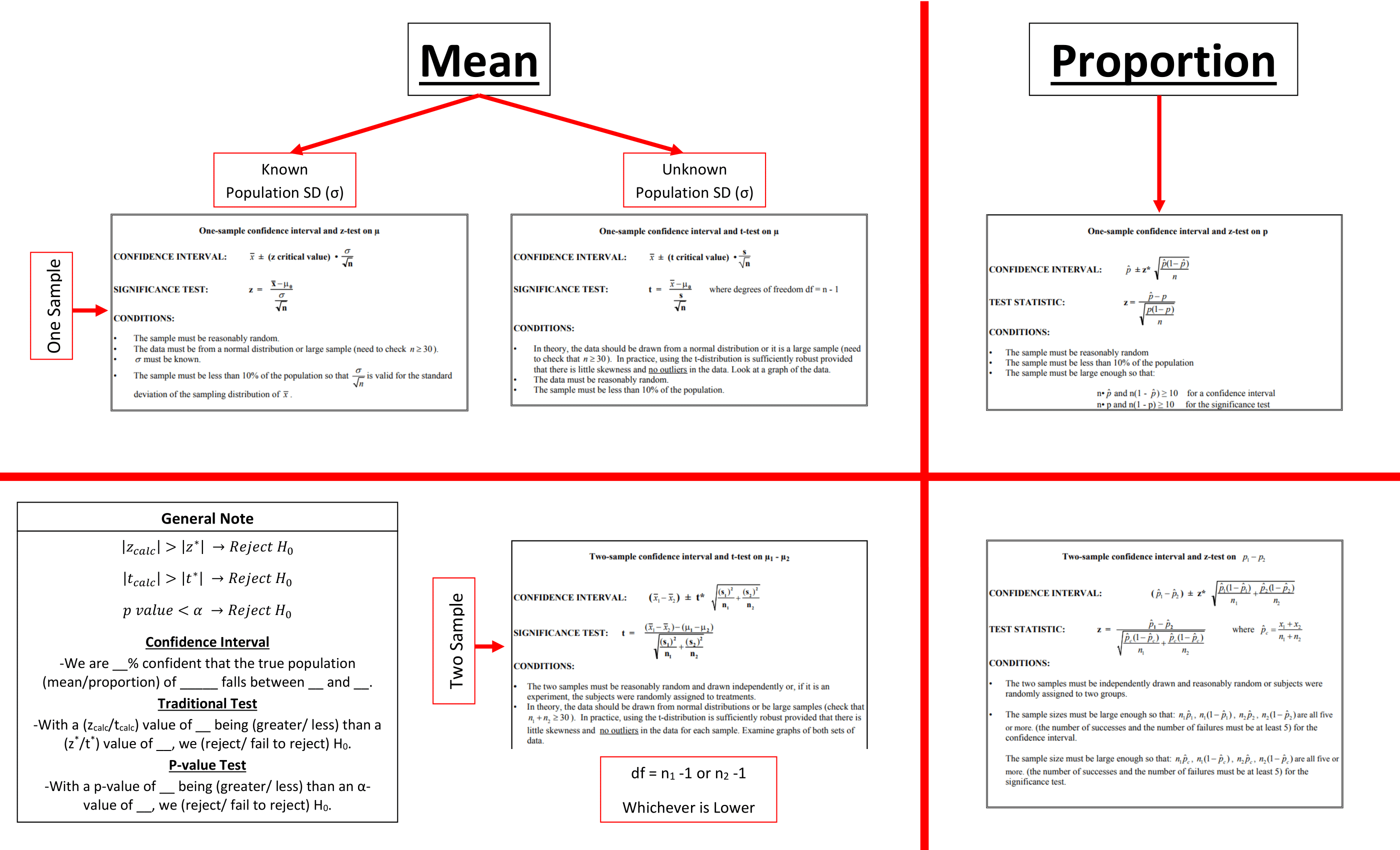
Description: This post describes exactly how and when to use each type of Z and T test i… more ›This post describes exactly how and when to use each type of Z and T test in Statistics. Using this stat cheat sheet, you'll be able to ace your upcoming exam or final! This easy-to-follow chart displays all the formulas and helpful tips you'll need to solve any Z significance test, T significance test or confidence interval. It also includes how to make a conclusion based on your critical value or p-value depending on your significance level. ‹ less
Description: Struggling with Probability? In this video, we explain what probability is… more ›Struggling with Probability? In this video, we explain what probability is and the 3 rules that all of probability follows. Then we walk through an easy to understand example to solidify the concept. This video serves as a perfect introduction to probability to help you conquer your Statistics class! ‹ less
Description: Learn how to solve any Probability Problem using several formulas and Venn … more ›Learn how to solve any Probability Problem using several formulas and Venn Diagrams. This video explains what the Intersection, Union and Conditional Equations are and where they come from. We will then cover how these formulas can be visualized in Venn diagrams. Using these formulas and Venn diagrams, we will then show how these can be used to solve several probability examples. This topic utilizes basic statistics and probability concepts. ‹ less
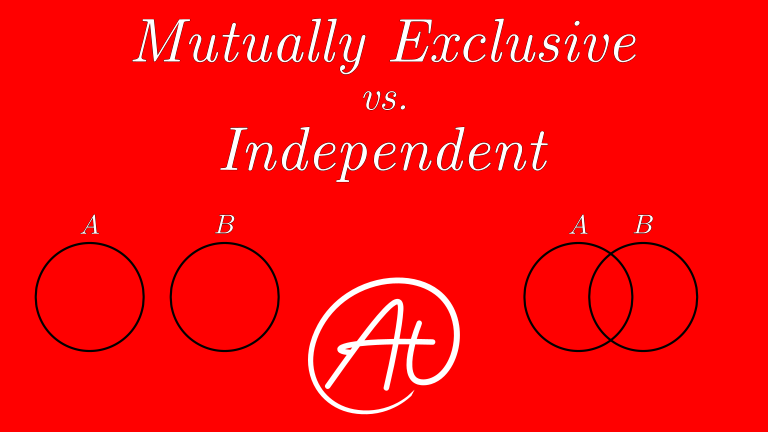
Description: Learn the difference between Mutually Exclusive and Independent events. Th… more ›Learn the difference between Mutually Exclusive and Independent events. This statistics tutorial explains what mutually exclusive events are and how to easily identify these events with Venn diagrams and probability formulas. Then we discuss what independent events are, how they are different from mutually exclusive events and how to identify them with different probability formulas. We cover all of these concepts with plenty of examples, too! ‹ less
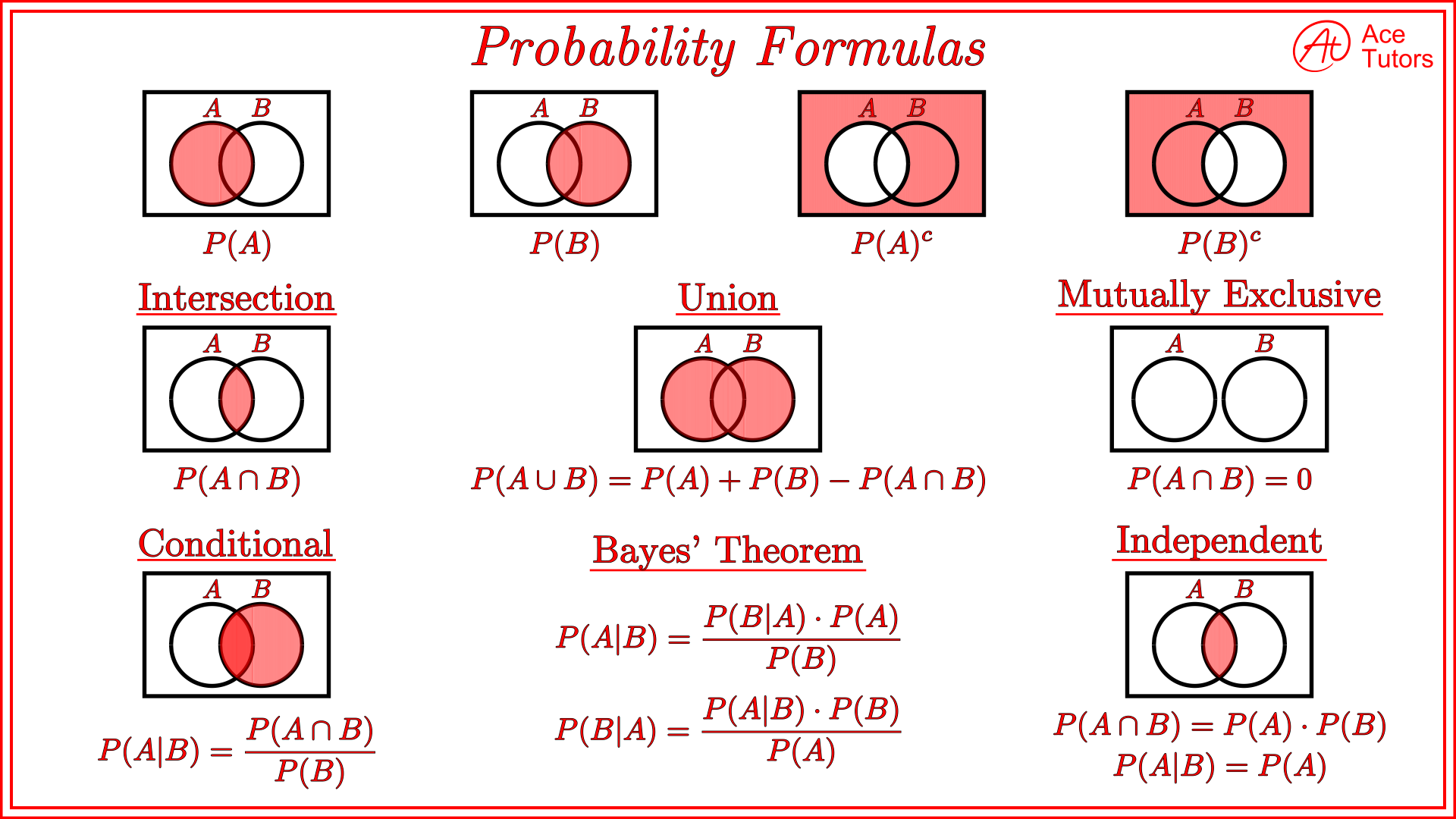
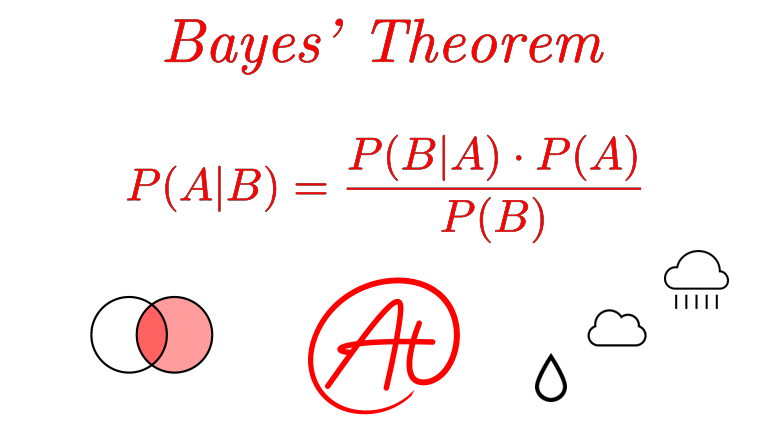
Description: Struggling with Probability? This post displays the equations for many pro… more ›Struggling with Probability? This post displays the equations for many probability formulas used in Statistics and how they can be visualized in Venn diagrams. Formulas include the Intersection formula, Union formula, Conditional formula and Bayes theorem. Download this cheat sheet to ace your Stat exam! ‹ less
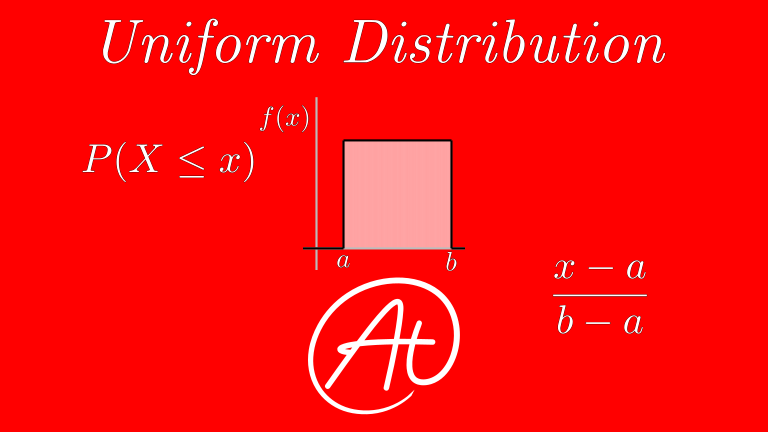
Description: Learn how to solve any Uniform Probability Distribution problem. This dist… more ›Learn how to solve any Uniform Probability Distribution problem. This distribution is a continuous distribution where every event, x, has the same exact probability of occurring. This tutorial first explains the concept behind the uniform distribution, then it goes into some of its key parameters (Mean, Standard Deviation and Probability), and finally it ends with a complete example to help solidify the concept. ‹ less
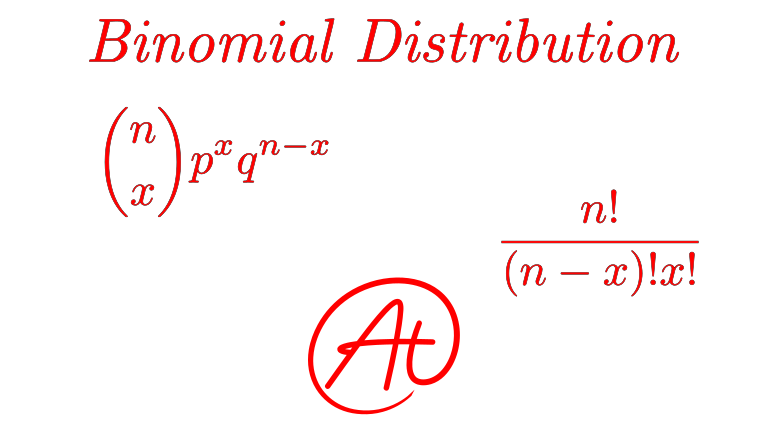
Description: Learn how to solve any Binomial Distribution problem in Statistics! In thi… more ›Learn how to solve any Binomial Distribution problem in Statistics! In this tutorial, we first explain the concept behind the Binomial Distribution at a high-level. Then we go over the exact conditions necessary to have a Binomial Distribution through an acronym, BINS. Next we cover some key parameters of this distribution like its Mean, Standard Deviation and Probability Formula. Since the probability formula is a little less intuitive than other formulas, we also take it a step further and explain exactly where it comes from and how it works. Finally we wrap things up with a full example to solidify all ideas explained in the video. ‹ less
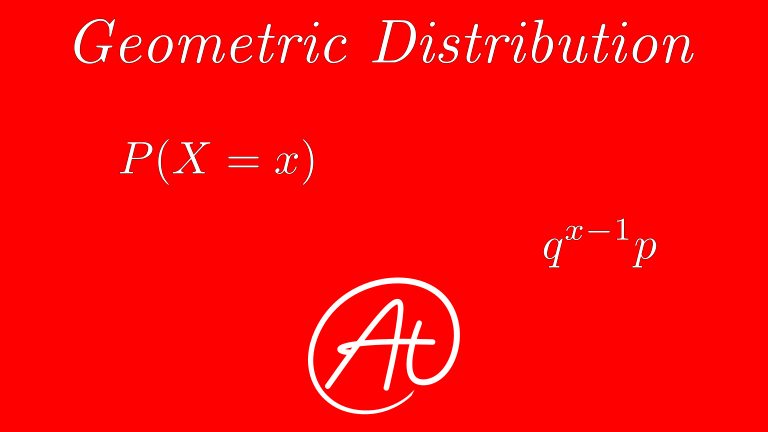
Description: Learn how to solve any Geometric Distribution problem in Statistics! In th… more ›Learn how to solve any Geometric Distribution problem in Statistics! In this tutorial, we first explain the concept behind the Geometric Distribution at a high-level. Then we explain why this distribution requires the same conditions, BINS, to be met as the Binomial Distribution. Next we cover some key parameters of this distribution like its Mean, Standard Deviation and Probability Formula. We also take it a step further and explain exactly where the probability formula comes from and how it works. Finally we wrap things up with a full example to solidify all ideas explained in the video. ‹ less
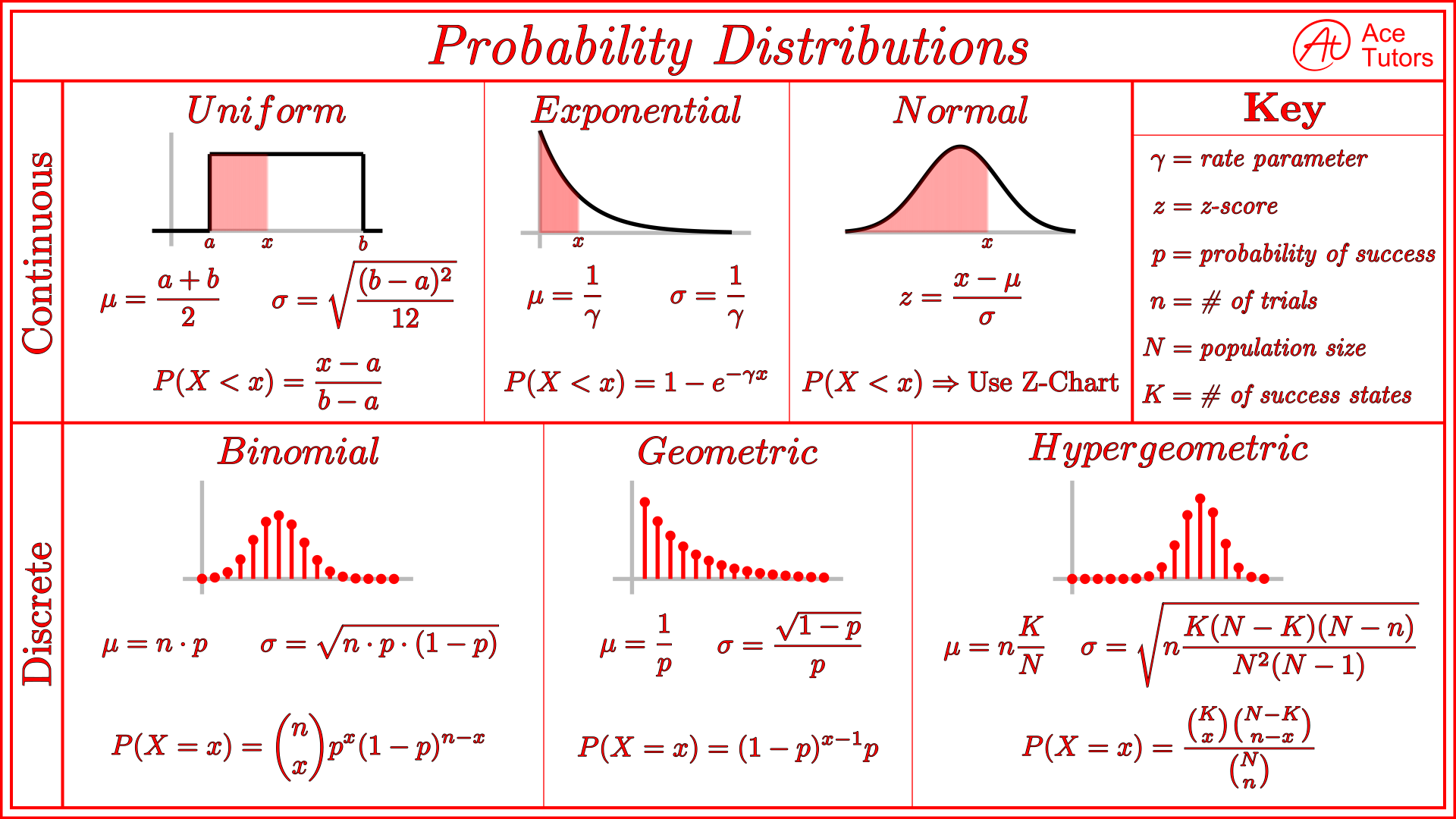
Description: Struggling with Probability Distributions? This guide covers the Uniform, … more ›Struggling with Probability Distributions? This guide covers the Uniform, Exponential, Normal, Binomial, Geometric and Hypergeometric Distributions. These include both continuous and discrete probability distributions. Each distribution has formulas for its Mean, Standard Deviation and Probability. ‹ less
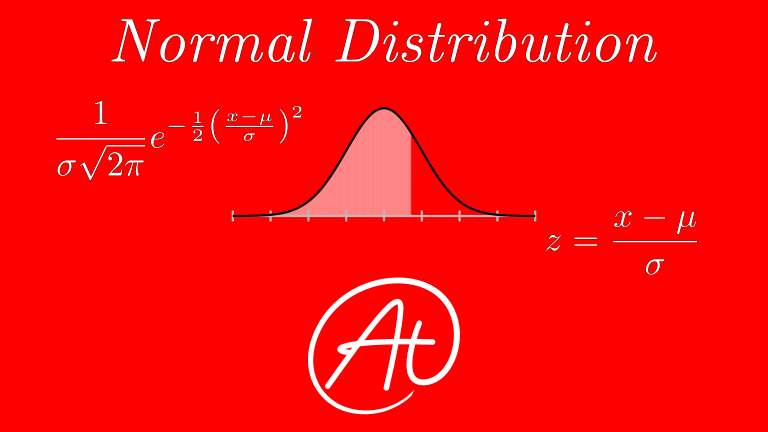
Description: Learn how to solve any Normal Probability Distribution problem. This tutor… more ›Learn how to solve any Normal Probability Distribution problem. This tutorial first explains the concept behind the normal distribution, then it discusses how to find probabilities for this distribution, and finally it ends with a complete example to help solidify the concept. The normal distribution is one of the most popular probability distributions covered in Stat due to its numerous applications to the real world. This topic is also a major building block for more advanced ideas such as confidence intervals and hypothesis testing. ‹ less
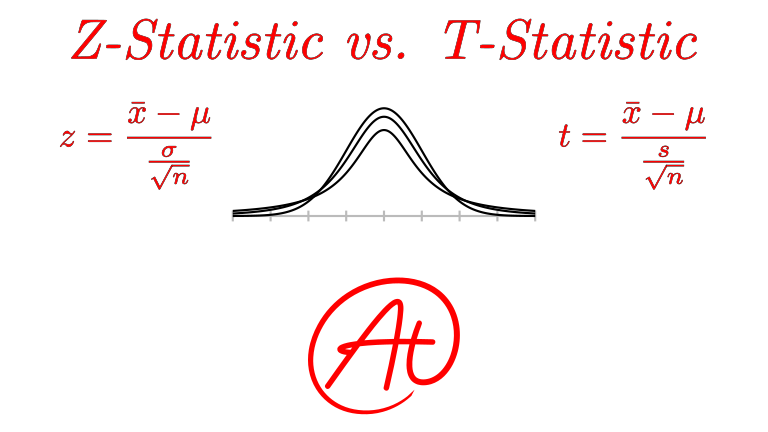
Description: Learn the difference between Z-Statistics and T-Statistics (also called Z-S… more ›Learn the difference between Z-Statistics and T-Statistics (also called Z-Scores vs T-Scores). This statistics tutorial explains what Z-Statistics are and how they differ from Z-scores. Then we discuss what T-Statistics are, how they differ from Z-Statistics and when to use them. We cover these concepts with a consistent example throughout the tutorial! ‹ less
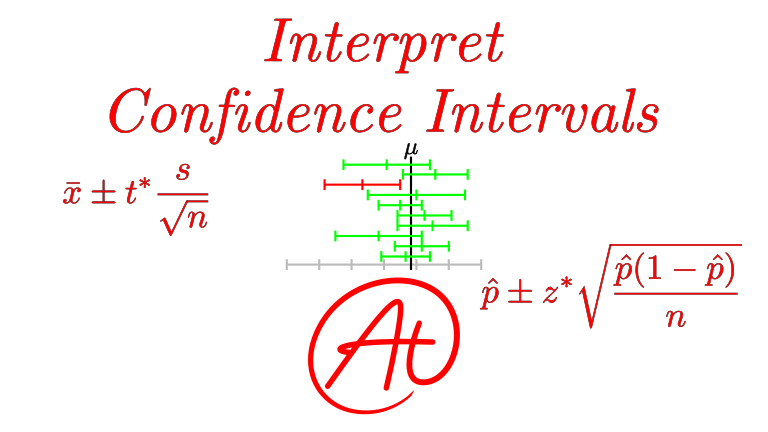
Description: Learn the how to interpret confidence intervals and why it's often so confu… more ›Learn the how to interpret confidence intervals and why it's often so confusing to do so. This statistics tutorial uses an example to explain the biggest mistake students make when concluding on confidence intervals. Then we discuss the correct confidence interval interpretation and touch on the difference between probability and confidence. Never make the wrong confidence interval conclusion using tricks from this video! ‹ less
Description: Learn how to solve any Bayes' Theorem problem. This tutorial first explain… more ›Learn how to solve any Bayes' Theorem problem. This tutorial first explains the concept behind Bayes' Theorem, where the equation comes from, and finally how to use the formula in an example. Bayes' Theorem is one of the most common equations covered in Statistics due to its numerous applications to the real world. It is also one of the most misunderstood theorems, but this video will help clear all of that up! ‹ less
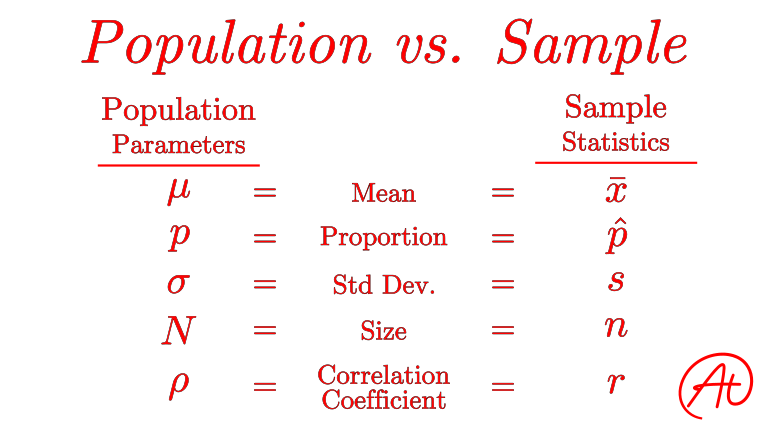
Description: Learn the difference between Populations and Samples. This video will firs… more ›Learn the difference between Populations and Samples. This video will first explain what a Population is with some examples. Then we'll go over the various symbols used for Populations called Population Parameters. Next, we'll describe what a Sample is and how it relates to a Population. Then we'll go over the symbols used for Samples called Sample Statistics. Finally, we'll wrap up by explaining how each of these concepts are used in the real world. ‹ less
Description: Learn how to solve any Hypothesis Testing problem! This tutorial explains … more ›Learn how to solve any Hypothesis Testing problem! This tutorial explains what hypothesis testing is and the process to follow to solve any hypothesis test question. In this video, you will learn the 5 C's to solve this major topic that is covered in most Statistics classes. These steps can be followed for any test no matter whether it is a 1 sample z test, 1 sample t test, 2 sample t test, ANOVA test, chi-squared test, etc. First, you Create your hypotheses. Then you Check the conditions necessary for your type of test. Next, you Calculate your test statistic and p-value. Then you Compare these values to your critical value and/or alpha value. And Finally you Conclude based on this comparison. This video will go into a good amount of detail on each step, and in future videos, I will go over each type of hypothesis test in depth with examples. ‹ less
Description: Learn how to solve any 1 Sample Z-Test for Proportions problem! This tutor… more ›Learn how to solve any 1 Sample Z-Test for Proportions problem! This tutorial explains when to use a 1 sample Z-test for proportions and the process to follow to solve any of these types of hypothesis test questions. In this video, you will follow the 5 C's to solve this type of hypothesis test. These steps can be followed for any test no matter whether it is a 1 sample z test, 1 sample t test, 2 sample t test, ANOVA test, chi-squared test, etc. First, we CREATE our hypotheses in terms of our population proportion, p. Then we CHECK 3 conditions are true in order to prove our data is a good sample of our population. Next, we CALCULATE our test statistic, z, and p-value. Then we COMPARE this p-value to our significance level (or alpha value). And finally we CONCLUDE based on this comparison. This video goes over the high level process and shows how it works with an in depth example problem. ‹ less
Description: Learn how to solve any 1 Sample Z-Test for Means problem! This tutorial ex… more ›Learn how to solve any 1 Sample Z-Test for Means problem! This tutorial explains when to use a 1 sample Z-test for means and the process to follow to solve any of these types of hypothesis test questions. In this video, you will follow the 5 C's to solve this type of hypothesis test. These steps can be followed for any test no matter whether it is a 1 sample z test, 1 sample t test, 2 sample t test, ANOVA test, chi-squared test, etc. First, we CREATE our hypotheses in terms of our population proportion, p. Then we CHECK 3 conditions are true in order to prove our data is a good sample of our population. Next, we CALCULATE our test statistic, z, and p-value. Then we COMPARE this p-value to our significance level (or alpha value). And finally we CONCLUDE based on this comparison. This video goes over the high level process and shows how it works with an in depth example problem. ‹ less
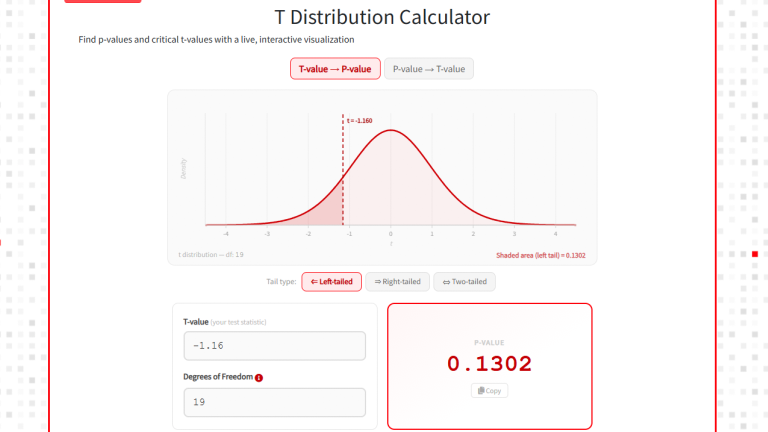
Description: This calculator helps you find p-values from t-statistics or critical t-val… more ›This calculator helps you find p-values from t-statistics or critical t-values from alpha values with a live visualization of the t distribution curve. ‹ less
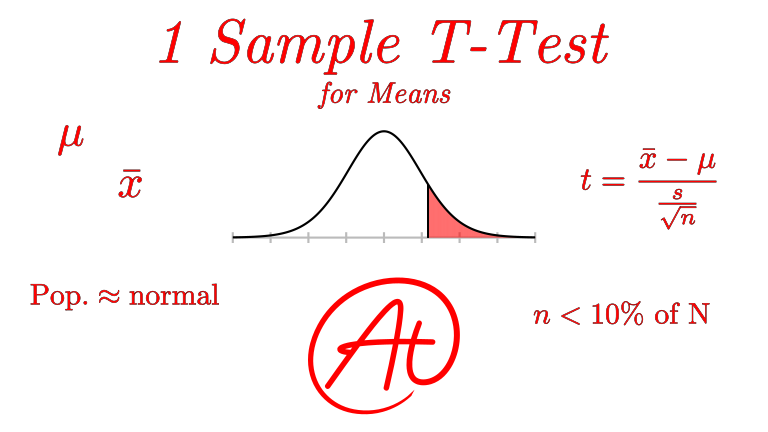
Description: Learn how to solve any 1 Sample T-Test for Means problem! This tutorial ex… more ›Learn how to solve any 1 Sample T-Test for Means problem! This tutorial explains when to use a 1 sample T-test for means, how it is different than a 1 sample Z-test for means and the process to follow to solve any of these types of hypothesis test questions. In this video, you will follow the 5 C's to solve this type of hypothesis test. These steps can be followed for any test no matter whether it is a 1 sample z test, 1 sample t test, 2 sample t test, ANOVA test, chi-squared test, etc. First, we CREATE our hypotheses in terms of our population mean, mu. Then we CHECK 3 conditions are true in order to prove our data is a good sample of our population. Next, we CALCULATE our test statistic, z, and p-value. Then we COMPARE this p-value to our significance level (or alpha value). And finally we CONCLUDE based on this comparison. This video goes over the high level process and shows how it works with an in depth example problem. ‹ less
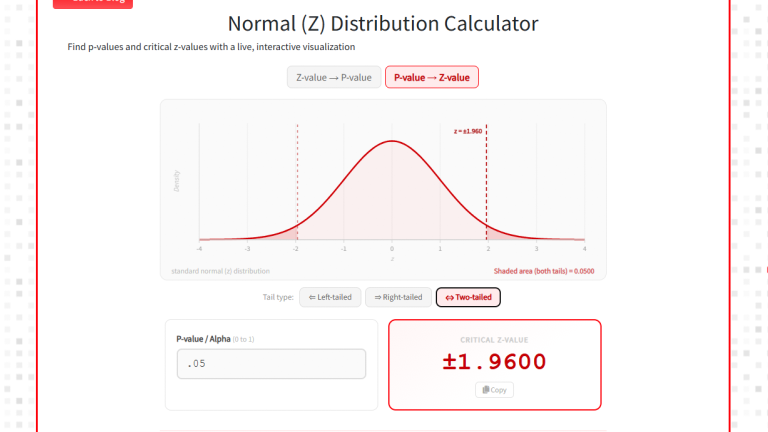
Description: This calculator helps you find probabilities from z-scores or z-scores from… more ›This calculator helps you find probabilities from z-scores or z-scores from probabilities using the Normal Distribution. For Hypothesis Testing, this can be used to find p-values from z-statistics or critical z-values from alpha values. This also shows a live, interactive visualization of the normal distribution based on your inputs. ‹ less
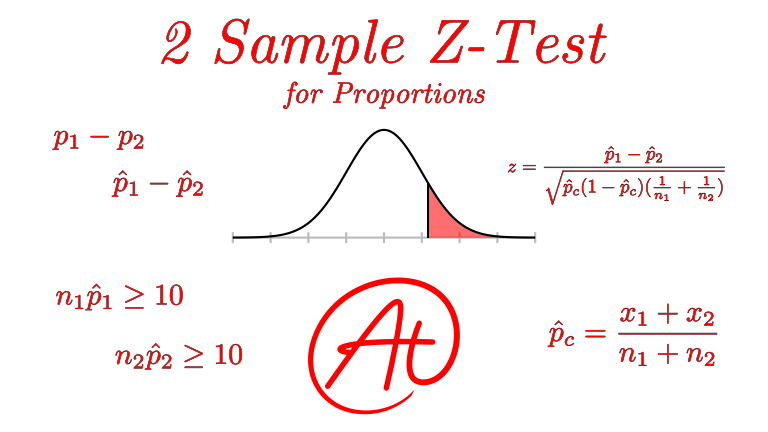
Description: Learn how to solve any 2 Sample Z-Test for Proportions problem! This tutor… more ›Learn how to solve any 2 Sample Z-Test for Proportions problem! This tutorial explains when to use a 2 sample Z-test for proportions, how it is different than a 1 sample Z-test for proportions and the process to follow to solve any of these types of hypothesis test questions. In this video, you will follow the 5 C's to solve this type of hypothesis test. These steps can be followed for any test no matter whether it is a 1 sample z test, 1 sample t test, 2 sample z test, 2 sample t test, ANOVA test, chi-squared test, etc. First, we CREATE our hypotheses in terms of our population proportions, p1 and p2. Then we CHECK 3 conditions are true in order to prove our data is a good sample of our populations. Next, we CALCULATE our test statistic, z, and p-value. Then we COMPARE this p-value to our significance level (or alpha value). And finally we CONCLUDE based on this comparison. This video goes over the high level process and shows how it works with an in depth example problem. ‹ less
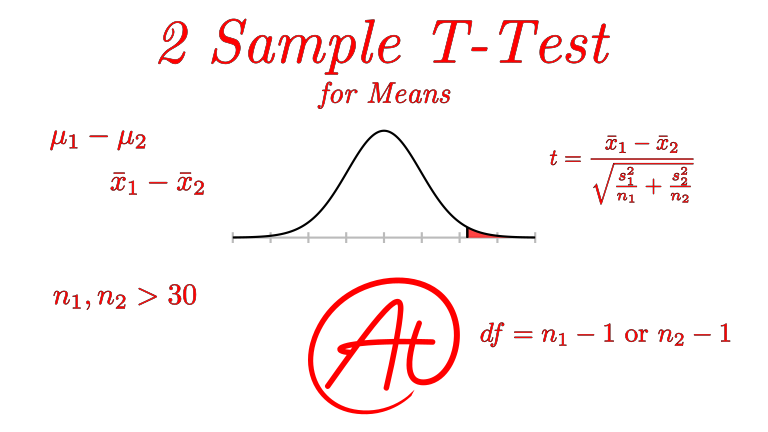
Description: Learn how to solve any 2 Sample T-Test for Means problem! This tutorial ex… more ›Learn how to solve any 2 Sample T-Test for Means problem! This tutorial explains when to use a 2 sample T-test for means, how it is different than a 1 sample Z or T test for means and the process to follow to solve any of these types of hypothesis test questions. In this video, you will follow the 5 C's to solve this type of hypothesis test. These steps can be followed for any test no matter whether it is a 1 sample z test, 1 sample t test, 2 sample z test, 2 sample t test, ANOVA test, chi-squared test, etc. First, we CREATE our hypotheses in terms of our population means, mu1 and mu2. Then we CHECK 3 conditions are true in order to prove our data is a good sample of our populations. Next, we CALCULATE our test statistic, t, and p-value. Then we COMPARE this p-value to our significance level (or alpha value). And finally we CONCLUDE based on this comparison. This video goes over the high level process and shows how it works with an in depth example problem. ‹ less
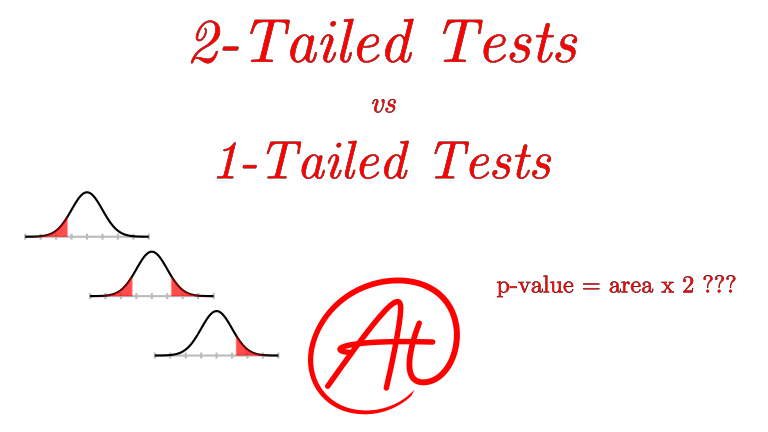
Description: Learn what 2 tailed hypothesis tests are and how they are different from 1 … more ›Learn what 2 tailed hypothesis tests are and how they are different from 1 tailed hypothesis tests! This tutorial explains the 3 different types of hypothesis testing types and how the 2-tailed test type is different. In this video, you will see how the left-tailed, right-tailed and two-tailed tests relate to your hypotheses. Then you will see how these test types create a Rejection Region in the distribution for the problem. Next you'll see how this rejection region relates to your alpha-value and p-value. Finally, you will learn how to calculate your p-value for a two-tailed hypothesis test and conclude based on your findings. ‹ less
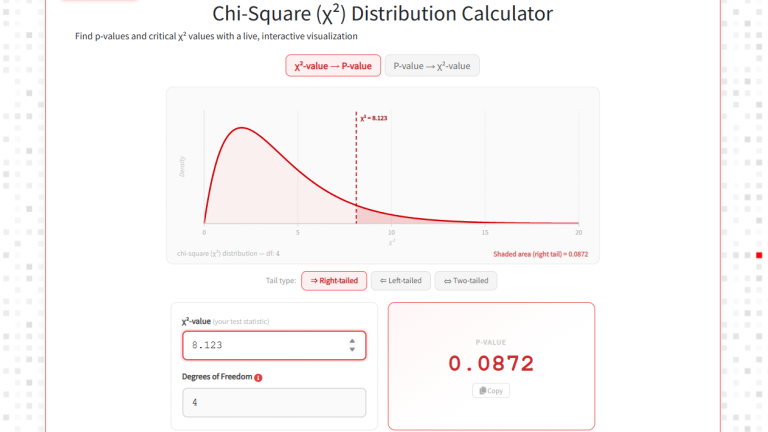
Description: This calculator helps you find probabilities from chi-square values or chi-… more ›This calculator helps you find probabilities from chi-square values or chi-square values from probabilities using the Chi-Square Distribution. For Hypothesis Testing, this can be used to find p-values from chi-square statistics or critical chi-square values from alpha values. This also shows a live, interactive visualization of the chi-squared distribution based on your inputs. ‹ less
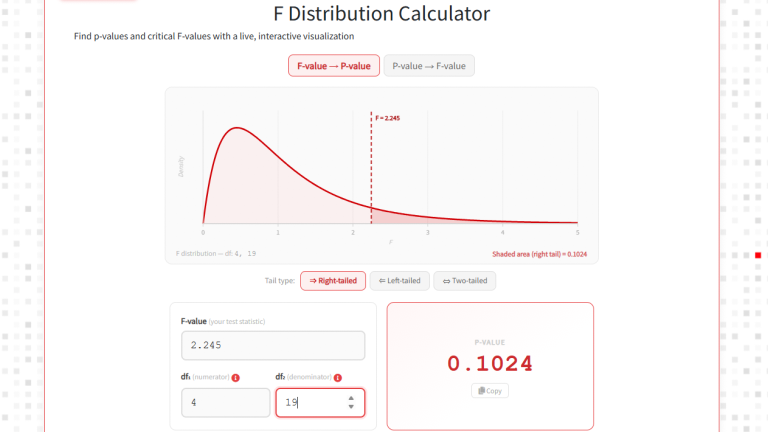
Description: This calculator helps you find probabilities from F-values or F-values from… more ›This calculator helps you find probabilities from F-values or F-values from probabilities using the F Distribution. For Hypothesis Testing, this can be used to find p-values from F statistics or critical F-values from alpha values. This also shows a live, interactive visualization of the F distribution based on your inputs. ‹ less
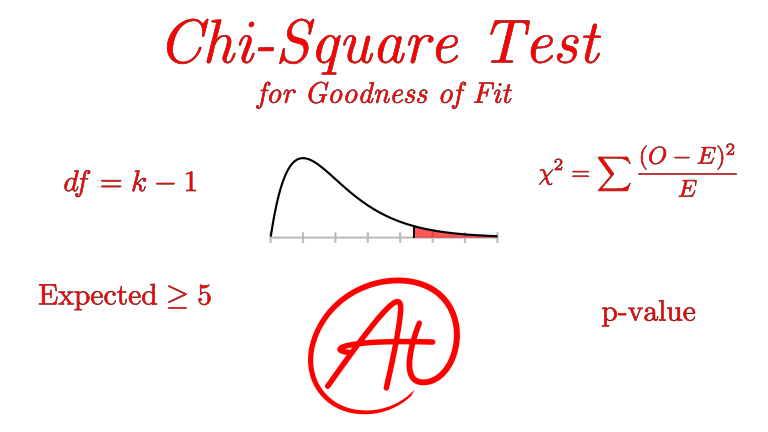
Description: Learn how to solve any Chi-Square Test for Goodness of Fit problem! This t… more ›Learn how to solve any Chi-Square Test for Goodness of Fit problem! This tutorial explains when to use a chi-squared test for GOF, how it differs from 1 or 2 sample z-tests for proportions and the process to follow to solve any of these types of hypothesis test questions. In this video, you will follow the 5 C's to solve this type of hypothesis test. These steps can be followed for any test no matter whether it is a 1 sample z test, 1 sample t test, 2 sample z test, 2 sample t test, ANOVA test, chi-squared test, etc. First, we CREATE our hypotheses. Then we CHECK 3 conditions are true in order to prove our data is a good sample of our population. Next, we CALCULATE our test statistic, chi-squared, and p-value. Then we COMPARE this p-value to our significance level (or alpha value). And finally we CONCLUDE based on this comparison. This video goes over the high level process and shows how it works with an in depth example problem. ‹ less
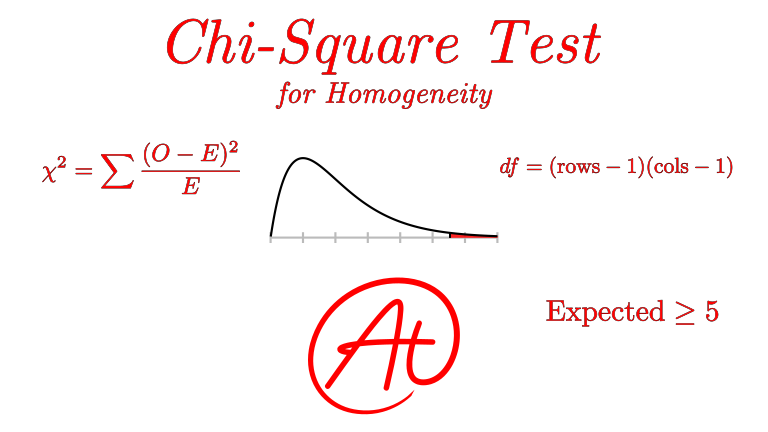
Description: Learn how to solve any Chi-Square Test for Homogeneity problem! This tutor… more ›Learn how to solve any Chi-Square Test for Homogeneity problem! This tutorial explains when to use a chi-squared test for homogeneity, how it differs from 1/2 sample z-tests for proportions and other chi-square tests and then goes over the process to follow to solve any of these types of hypothesis test questions. In this video, you will follow the 5 C's to solve this type of hypothesis test. These steps can be followed for any test no matter whether it is a 1 sample z test, 1 sample t test, 2 sample z test, 2 sample t test, ANOVA test, chi-squared test, etc. First, we CREATE our hypotheses. Then we CHECK 3 conditions are true in order to prove our data is a good sample of our population. Next, we CALCULATE our test statistic, chi-squared, and p-value. Then we COMPARE this p-value to our significance level (or alpha value). And finally we CONCLUDE based on this comparison. This video goes over the high level process and shows how it works with an in depth example problem. ‹ less
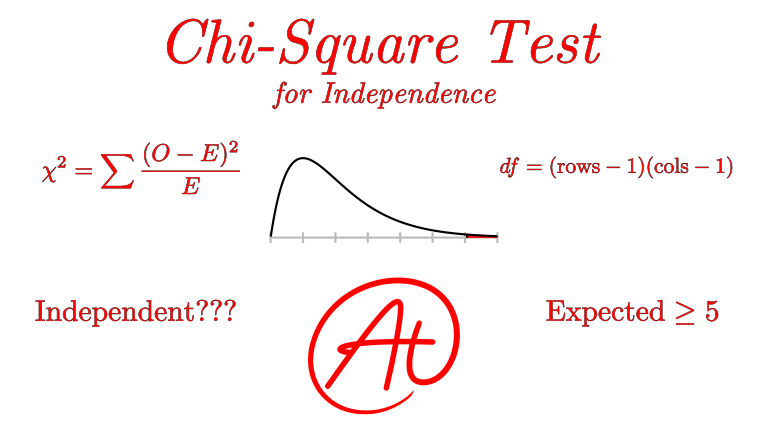
Description: Learn how to solve any Chi-Square Test for Independence problem! This tuto… more ›Learn how to solve any Chi-Square Test for Independence problem! This tutorial explains when to use a chi-squared test for independence, how it differs from 1/2 sample z-tests for proportions and other chi-square tests and then goes over the process to follow to solve any of these types of hypothesis test questions. In this video, you will follow the 5 C's to solve this type of hypothesis test. These steps can be followed for any test no matter whether it is a 1 sample z test, 1 sample t test, 2 sample z test, 2 sample t test, ANOVA test, chi-squared test, etc. First, we CREATE our hypotheses. Then we CHECK 3 conditions are true in order to prove our data is a good sample of our population. Next, we CALCULATE our test statistic, chi-squared, and p-value. Then we COMPARE this p-value to our significance level (or alpha value). And finally we CONCLUDE based on this comparison. This video goes over the high level process and shows how it works with an in depth example problem. ‹ less
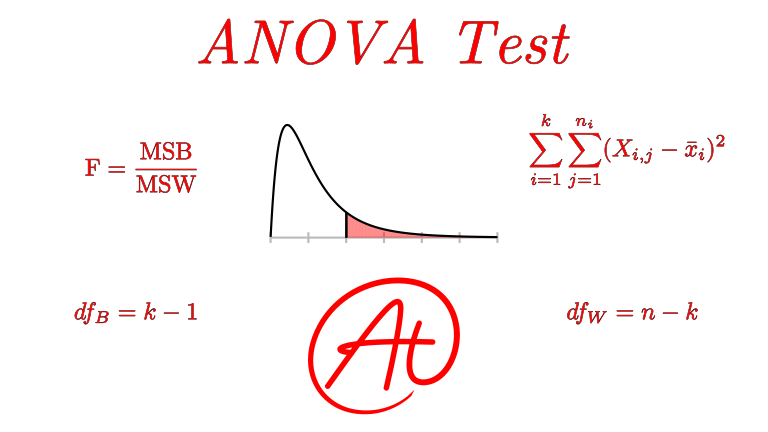
Description: Learn how to solve any ANOVA Test problem! This video will cover the one-w… more ›Learn how to solve any ANOVA Test problem! This video will cover the one-way ANOVA test specifically. This tutorial explains when to use an ANOVA hypothesis test and then goes over the process to follow to solve any of these types of hypothesis test questions. In this video, you will follow the 5 C's to solve this type of hypothesis test. These steps can be followed for any test no matter whether it is a 1 sample z test, 1 sample t test, 2 sample z test, 2 sample t test, ANOVA test, chi-squared test, etc. First, we CREATE our hypotheses. Then we CHECK 3 conditions are true in order to prove our data is a good sample of our population. Next, we CALCULATE our test statistic, chi-squared, and p-value. Then we COMPARE this p-value to our significance level (or alpha value). And finally we CONCLUDE based on this comparison. This video goes over the high level process and shows how it works with an in depth example problem. ‹ less
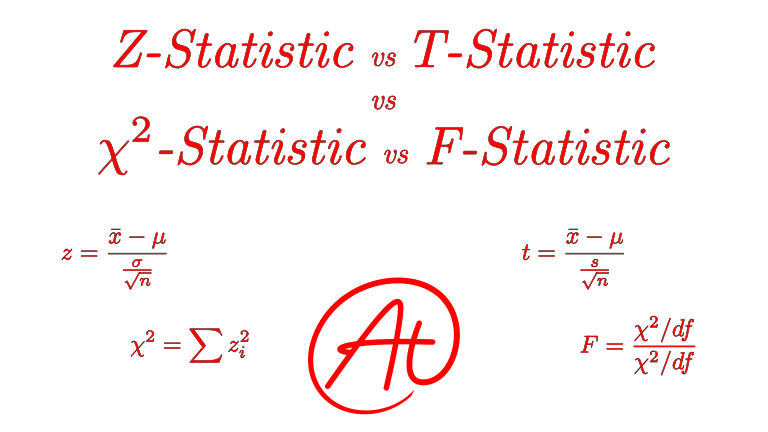
Description: Learn the difference between Z, T, Chi-square and F statistics! This video… more ›Learn the difference between Z, T, Chi-square and F statistics! This video will cover what each of these statistics are and the common thread shared between each of them. This tutorial explains what each the Z statistic, T statistic, Chi-square statistic and F statistic are and where they come from. The z-statistic is the base statistic you use for the normal distribution. The t-statistic is a more conservative version of the z-statistic when you don't know a population's standard deviation. The chi-squared statistic is a sum of multiple squared z-statistics. The f-statistic is the ratio of two chi-square values. ‹ less
Description: Learn the idea of Confidence Intervals! This tutorial explains what confid… more ›Learn the idea of Confidence Intervals! This tutorial explains what confidence intervals are at a high level and the process to follow to solve any CI question. In this video, you will learn the basic form that all types of confidence intervals use. This formula can be used no matter you are constructing a 90%, 95%, 99%, etc. confidence interval. First, you take your sample statistic (either x-bar, p-hat, difference between 2 means or proportions) and go left and right (plus or minus) your critical value times you standard error. The critical value is the critical z or t value corresponding to your distribution and how confident you want to be. Your standard error changes depending on what you are trying to estimate, but it ultimately always takes into account the variability in the data and the sample size. Finally, this video will explain how to interpret any confidence interval. ‹ less
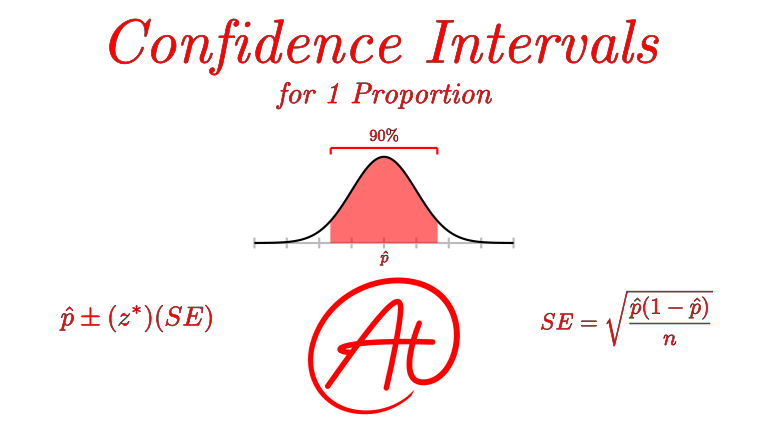
Description: Learn how to solve any Confidence Interval for 1 Proportion! This tutorial… more ›Learn how to solve any Confidence Interval for 1 Proportion! This tutorial explains the formula to use for 1 proportion confidence intervals and where it comes from. Then we discuss the necessary conditions we need to satisfy before creating our 1 proportion CI. Next, we help solidify this concept with working through an example. ‹ less
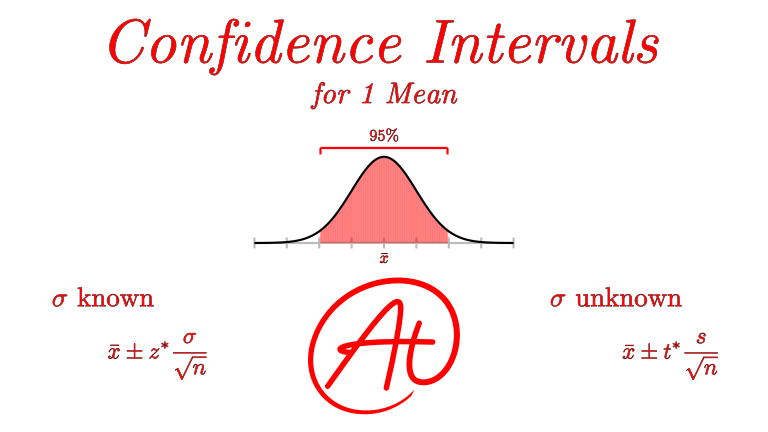
Description: Learn how to solve any Confidence Interval for 1 Mean! This tutorial expla… more ›Learn how to solve any Confidence Interval for 1 Mean! This tutorial explains the formulas to use for 1 mean confidence intervals and where they comes from. There are 2 different forms of the formula you will see depending on whether you the population standard deviation is known or unknown. If the population SD is known, you will use a critical z value and the normal distribution for your confidence interval. If the pop. SD is unknown, you will use a critical t value and the t distribution for your CI. After we learn the 2 formulas, then we discuss the necessary conditions we need to satisfy before creating our 1 mean CI. Next, we help solidify this concept with working through 2 examples. One example is calculating the 1 mean CI when sigma is known and the other example calculates the CI when sigma is unknown. ‹ less
Description: Learn about Newton's 3 Laws of Motion and how to use each one of them. New… more ›Learn about Newton's 3 Laws of Motion and how to use each one of them. Newton's 1st Law is an object at rest stays at rest and an object in motion stays in motion with the same speed and direction (velocity) until acted on by an unbalanced force AKA inertia! Newton's 2nd Law is an object's acceleration is directly proportional to the net force applied and inversely proportional to the object's mass. Newton's 3rd Law is for every action, there is an equal and opposite reaction. ‹ less
Description: Learn how to draw any Free-body Diagram in Physics 1! This video what Free… more ›Learn how to draw any Free-body Diagram in Physics 1! This video what Free-body Diagrams are and a straight-forward 4 step process to simplify and visualize any Physics problem. Using this concept, we will also step through 2 common examples for Free-Body Diagrams. ‹ less
Description: Learn how to find the limiting reactant of any reaction in Chemistry! This… more ›Learn how to find the limiting reactant of any reaction in Chemistry! This video first explains what the limiting reagent is at a high level. Then we explain a simple 4 step process for how to solve any limiting reactant problem. All of these explanations are discussed along side multiple limiting reactant examples as well! This tutorial is great for students taking General Chemistry 1 (Gen Chem 1). ‹ less
Select your School
To see the correct information on this page, please choose your school.